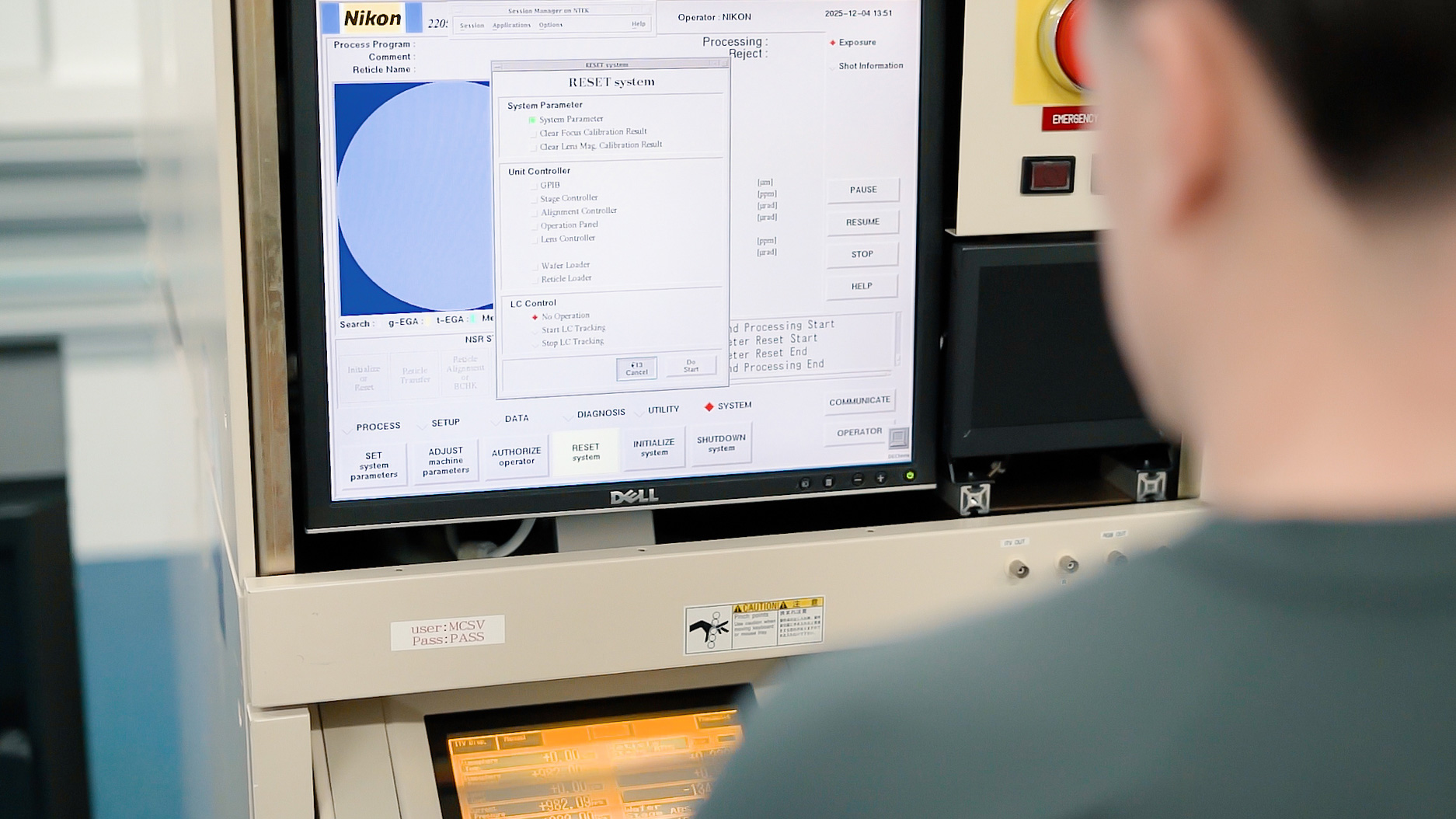
Lens optimisation involves analysing and adjusting the optical performance of a lithography system to improve imaging accuracy, resolution and overall process stability.
Clear and Improved Performance
Nearly a half of all Nikon second-hand steppers are running with poor lens performance.
We're the only company able to alter the lens to the same level and quality as the factory in Japan. Let's get started!

The lens optimisation work carried out by NTEK Litho significantly improved the imaging performance of our stepper system. Their expertise helped us achieve better process stability and higher production yields.
— Semiconductor Manufacturing Client
Why Does my Lens Need Optimised?
Poor lens performance could be caused by a variety of different factors. In most cases, it's down to lens movement during shipment, changing tool temperature and altitude, or drifting over time through hard run machines. This significantly worsens the performance of your machine and decreases the revenue of your organisation.
To avoid this happening, get in touch with us today and let's discuss what we can achieve for you.
Highly Specialised
Lens Optimisation is a highly-specialised task, and we are proud to be one of the very few companies worldwide capable of providing this service.
Here's you can see performance data for a Nikon i11D lens we adjusted for one of our customers. With shift coma detected in X and Y, the internal coma lens was adjusted using inclination washers and UL1, UL2 lens micrometers. These changes resulted in the bottom curve, increasing the lens's depth of focus at its resolution and significantly improving all structure profiles. Following adjustments, the lens readily met the new i11D specifications.
Got Questions? We Have Answers
Frenquently Asked Questions
What is lens optimisation in photolithography systems?
Why is lens optimisation important for semiconductor manufacturing?
Over time, optical components can drift from optimal performance. Lens optimisation helps restore accuracy, improve yield and ensure consistent wafer patterning.
Which systems do you provide lens optimisation for?
NTEK Litho specialises in Nikon steppers and scanners, including G-line, i-line and DUV lithography systems used in semiconductor manufacturing.
How do you identify when optimisation is required?
Our engineers perform detailed system analysis and performance checks to identify optical deviations, allowing us to implement precise adjustments to improve imaging quality.
Can lens optimisation improve production yields?
Yes. By enhancing image accuracy and focus stability, lens optimisation can significantly improve process reliability and overall manufacturing yield.
Is lens optimisation suitable for older lithography systems?
Absolutely. Many legacy tools benefit from lens optimisation, helping extend equipment life while maintaining high performance.
Can this service be combined with preventative maintenance?
Yes. Lens optimisation is often carried out alongside preventative maintenance to ensure the entire system continues to operate at peak performance.
How long does a lens optimisation service typically take?
The timeframe depends on the system and level of optimisation required. Our engineers will assess the tool and provide a clear schedule before work begins.
Do you offer this service internationally?
Yes. NTEK Litho provides lens optimisation services to semiconductor facilities worldwide.
How can I arrange a lens optimisation service?
Contact our team with details of your lithography system and operational requirements, and we’ll recommend the most suitable optimisation approach.
Trusted By


